
Find San Luis Residents
Start any San Luis lookup from the clue you already hold. An address is a gift. Point it at the Yuma County Assessor and its parcel map. A full name opens more doors. It can lead to recorded documents and court cases, and also to business entities, licenses, or an old directory entry. A year or a former address shifts the work toward city-county directories, newspapers, deeds, probate, and census records. Every source is a snapshot of one moment. Match it against a second record before treating two similar names as one person.
No official roll lists a complete household. A parcel card names the tax owner alone, not everyone on the site. The voter status tool is identity-gated. Arizona law also limits who may pull voter lists. Non-owner household members and people using a protected address can be missing entirely. Treat the San Luis residents directory as a chain of clues. Do not take proof from a single result.
- Search the Yuma County property roll by owner name or street address. Save the parcel number, situs address, legal description, and mailing address.
- Check the deed index in both grantor and grantee roles. A grantor transfers an interest; a grantee receives it.
- Use Arizona court search for a case lead, then confirm the docket or document with the court that keeps the file.
- For an older trail, browse the county directory volumes and Arizona Room newspapers one year at a time.
- When a needed record is not online, send a narrow request to the city, county, court, library, or archives custodian.
San Luis Directory Custodians
San Luis is not the Yuma County seat. Its records therefore split by level of government. City Hall routes the municipal files. The Recorder in Yuma keeps deeds and most other recorded instruments. The Assessor ties owner names to taxable parcels. County Elections guards registration data under strict use rules. Court files divide among San Luis Municipal Court, South County Justice Court, and the Clerk of Superior Court. One request simply cannot reach every resident record across that geography.
The San Luis street directory covers the full address-first route. For a home search, the choice stays simple. Send the request to the office that created or received the record. Cite a name, date span, parcel, case, or instrument number whenever you can.
Search San Luis EagleWeb Records
EagleWeb from the Yuma County Assessor is the strongest address-first door. It leads straight into the San Luis residents directory. Guest access is free through the public-user route. Its Account Search runs in Basic and Advanced modes. County guidance favors a few strong fields over filling every box. Begin with a surname, a street, or an exact parcel number. Narrow only if the results run too broad.
| Search key | Best use | Format note |
|---|---|---|
| Owner name | Find parcels tied to a person or entity | Try last name first and name variants |
| Situs address | Find the taxable site | Separate number, direction, street, type, and unit |
| Parcel number | Open one known account | Portal example omits dashes |
| City or ZIP | Narrow a larger query | Not a complete resident list |
| Legal description | Bridge old and new address forms | Use subdivision, lot, block, or land-grid fields |
A parcel card can carry mailing and situs addresses. It may also show account and parcel numbers, classification, legal description, values, land details, transfers, and a linked Recorder instrument. The mailing destination may be a trust, an agent, a business, or a post office box. Even a primary-residence class is administrative evidence. It never lists every person inside the home. The San Luis City Clerk request screen marks the separate route for municipal files outside EagleWeb.
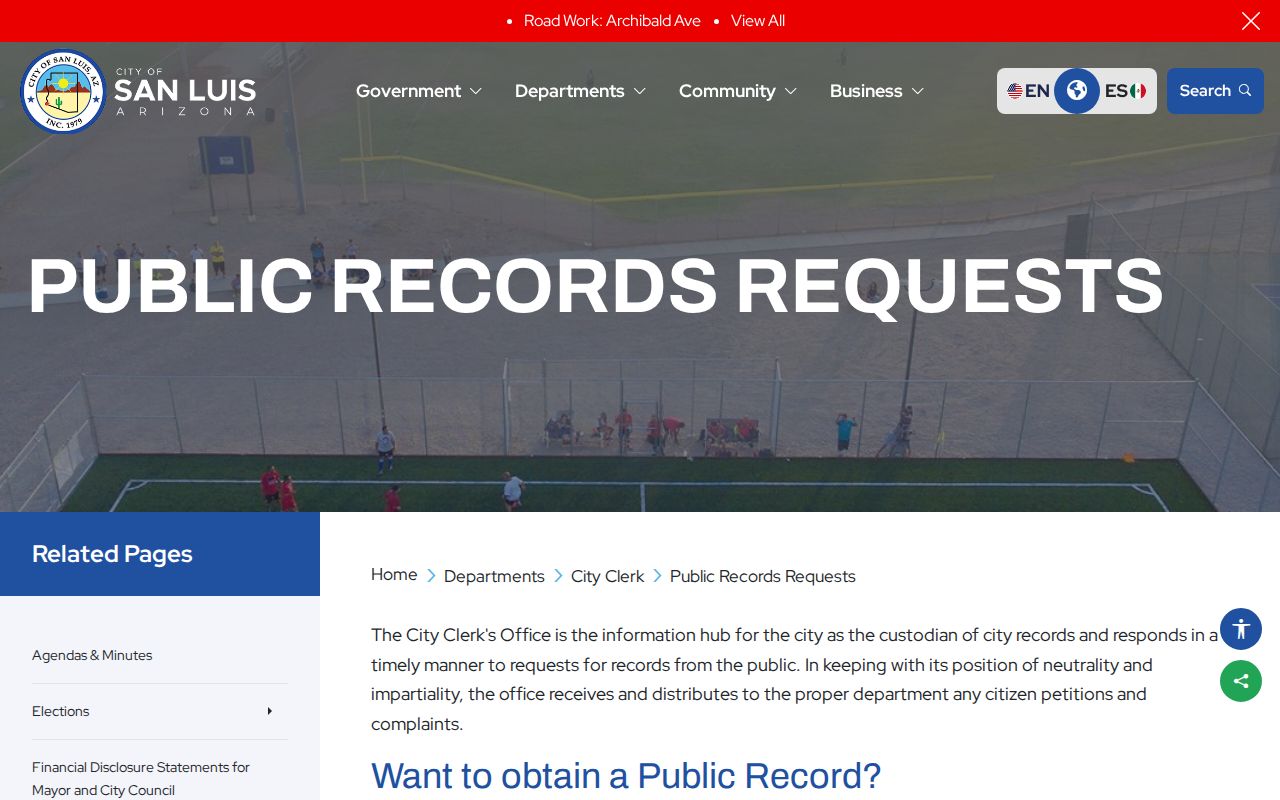
The city request page shows a municipal path distinct from the county property portal.
Current San Luis Resident Directories
Several public sources behave like a current directory, yet each one covers a different group. The right roll depends on the fact at hand. Ownership, court participation, a filed business role, and voter status are not the same as present occupancy. Each answers a different question. A San Luis residents directory search gains real strength when two independent records share a stable identifier, whether a parcel, case, instrument, spouse, or business.
| Official source | People or links shown | Keeper | Access limit |
|---|---|---|---|
| Property roll | Owners and tax-mailing contacts | Yuma County Assessor | Free guest portal; not an occupant roll |
| Recorded documents | Parties to deeds, liens, releases, and plats | Yuma County Recorder | Index and counter; exact online start unstated |
| Court case index | Public parties and docket facts | Arizona courts and local clerks | Sealed and other protected cases excluded |
| Voter information | Matched voter status or authorized roll fields | County Recorder and state portal | Identity gate and statutory use limits |
| Entity and license files | Public business or credential affiliations | Arizona agencies | Contact address may not be a home |
For a one-name search, follow the evidence order laid out in the San Luis resident lookup. The lookup favors records you can verify. A commercial compilation may be quicker. But it can merge stale feeds and cannot correct the government source behind them. An official index gives you the custodian, the record number, and a clear path. That route takes more work. Yet it stays reproducible and far easier to verify.
Verify San Luis Court Directory Leads
The Arizona Public Access Case Lookup searches participating courts by case number or party name. It covers 177 of 184 courts and refreshes weekly. A result names the court, case number, type, and filing date. It also lists party role, status, and docket events. Not every filed image becomes a public document, though. Sealed matters, orders of protection, and mental-health cases stay absent. Victim or witness data, juvenile matters, and other protected material stay absent too.
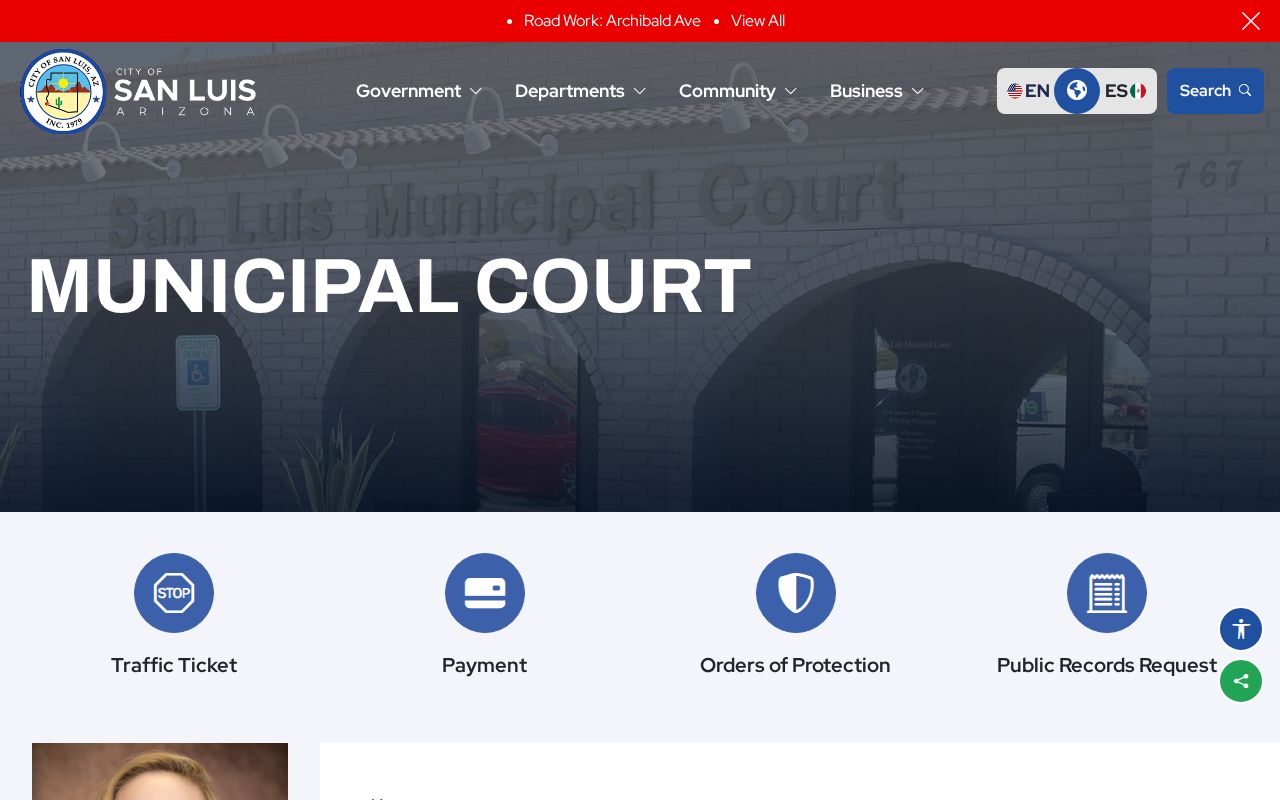
San Luis Municipal Court handles city-code, traffic, and misdemeanor matters within its jurisdiction. Its current written request form covers viewing, copies, audio, or certification. It asks for party names, date of birth, case details, and the documents you want. When a statewide result differs, the local file controls. Superior Court civil and criminal documents filed from July 1, 2010 may also be available through eAccess. Account and purchase steps apply. The state court search entry shows why any result is a lead. It is not a final finding.
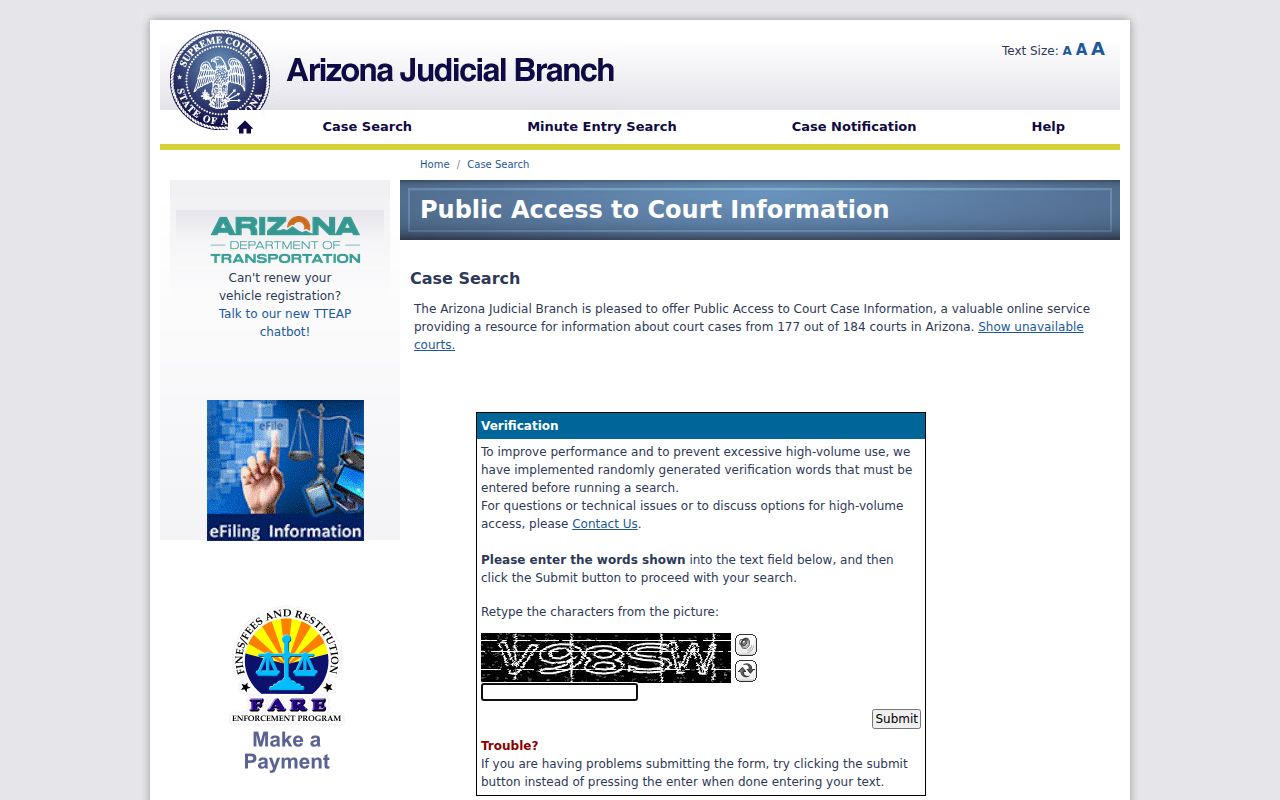
Record the court and case number before requesting the official docket.
San Luis Voter Directory Limits
My.Arizona.Vote is built for one voter at a time. It checks a person's own status and ballot details. The form asks for county, last name, date of birth, and an accepted identifier, which makes it useless as an open map of San Luis voters. State law sets the boundary. Under A.R.S. §16-168, authorized voter records can include a registrant's name, party preference, registration date, residence address, mailing address, ZIP, phone if supplied, birth year, occupation if supplied, and participation history. Ballot choices stay private.
Some fields never leave the office. Month and day of birth, Social Security and driver identifiers, signatures, email addresses, and protected-registration details are all withheld. The county affidavit demands a permitted purpose. It also bars transfer or online redistribution of any list you receive. For civic context, aggregate totals by precinct or district are the safer choice, since they expose no household; a missing result may simply reflect a move, list maintenance, or a protected record.
Lawful use. Public records may support personal research, family history, and civic review, but never stalking, harassment, threats, or impersonation.
The official Arizona voter portal shows the identity-gated route.
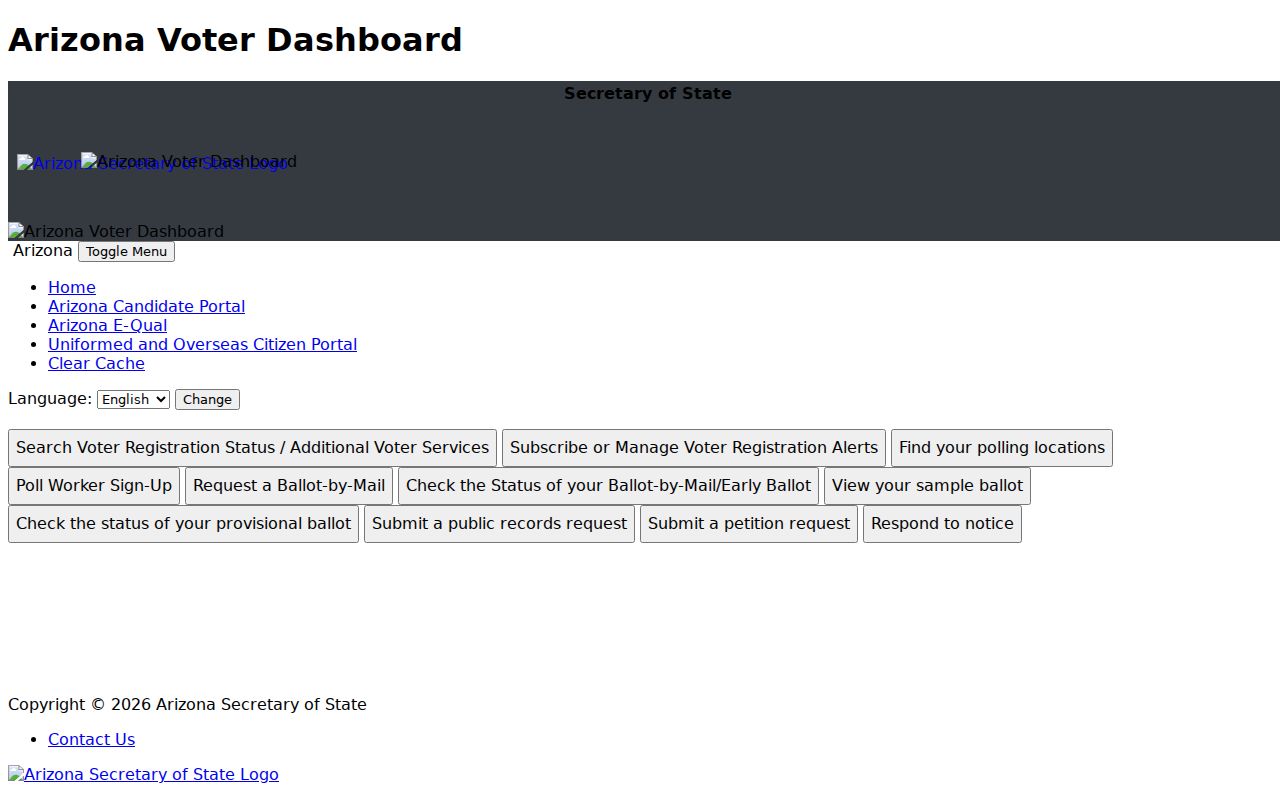
A voter lookup is not a public block directory.
San Luis Family Record Directory
Birth and death records run on a separate track. The Arizona Bureau of Vital Records and Yuma County's local registrar issue recent certified copies only to eligible applicants. Applicants must prove identity and legal interest. A.R.S. §36-351 sets the archival clock. Birth certificates move to the State Archives 75 years after birth, and death certificates follow after 50 years. That cutoff opens historic research. It does not loosen the rules for a recent certified copy.
Marriage licenses and divorce decrees sit with the Yuma County Clerk of Superior Court, not the state vital office. A court index may point to a divorce case, but the decree lives in the case file. Older family lines reward patience. Pair the archival certificate index with probate, deeds, obituaries, directory volumes, church registers, cemetery sources, and Arizona Room newspapers, since each adds a relationship, place, or date that keeps same-name residents apart. The state vital-records landing page carries the application.
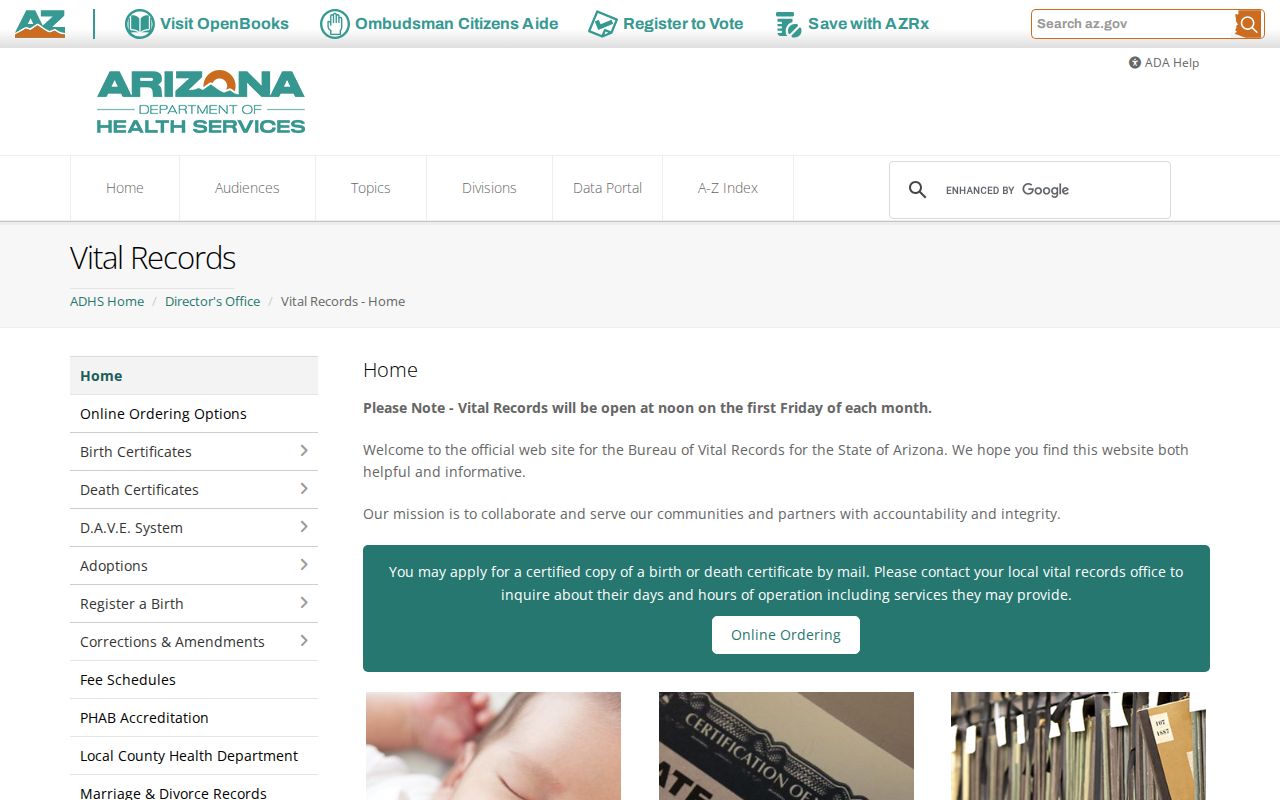
Use the current agency form because eligibility, proof, fees, and service channels can change.
Historical San Luis Resident Directories
The Arizona Memory Project digitized the Yuma City-County and Cosmopolitan Telephone directories, fifteen volumes in all: 1948, 1949, and every year from 1951 through 1963. San Luis appears in the countywide books. Its entries sit beside Yuma, Somerton, Wellton, and others. FamilySearch International digitized the 1960 volume in 2019 for the State Research Library. Spelling matters here. Catalog text may spell the city as “San Luise,” so OCR alone can miss a useful entry. An entry may show surname, given name, spouse, occupation, phone, home or room address, and a post office box. Read the publisher's abbreviations closely. Early rural listings were box-based. Work one volume at a time, and treat an appearance and later absence as a bracket on a move, checking it against deeds, newspapers, census records, or probate. The San Luis city directory collection lists the years.
San Luis Arizona Room Records
The Arizona Room at Yuma Main Library fills gaps. Its newspaper microfilm is deep. Coverage spans 1872 through 2011 in the aggregate, with named Yuma runs from 1935 through 2011 and early newspaper material from 1859 through 1936. Clipping folders add local color. The Yuma County Library ephemera include San Luis folders for 1956 through 1988, shorter or annual spans from 1990 through 2012, and a general local-history folder. Ask Special Collections for a reel, folder, topic, or year. Open-ended surname searches work poorly there. School registers, diaries, scrapbooks, family files, oral histories, and manuscripts may add facts, though access limits can protect students or private donors. The San Luis Branch migrant-worker project is especially useful for agricultural and cross-border lives that property ownership does not capture. Bring a year or a topic. The library's Arizona Room overview marks the access point.
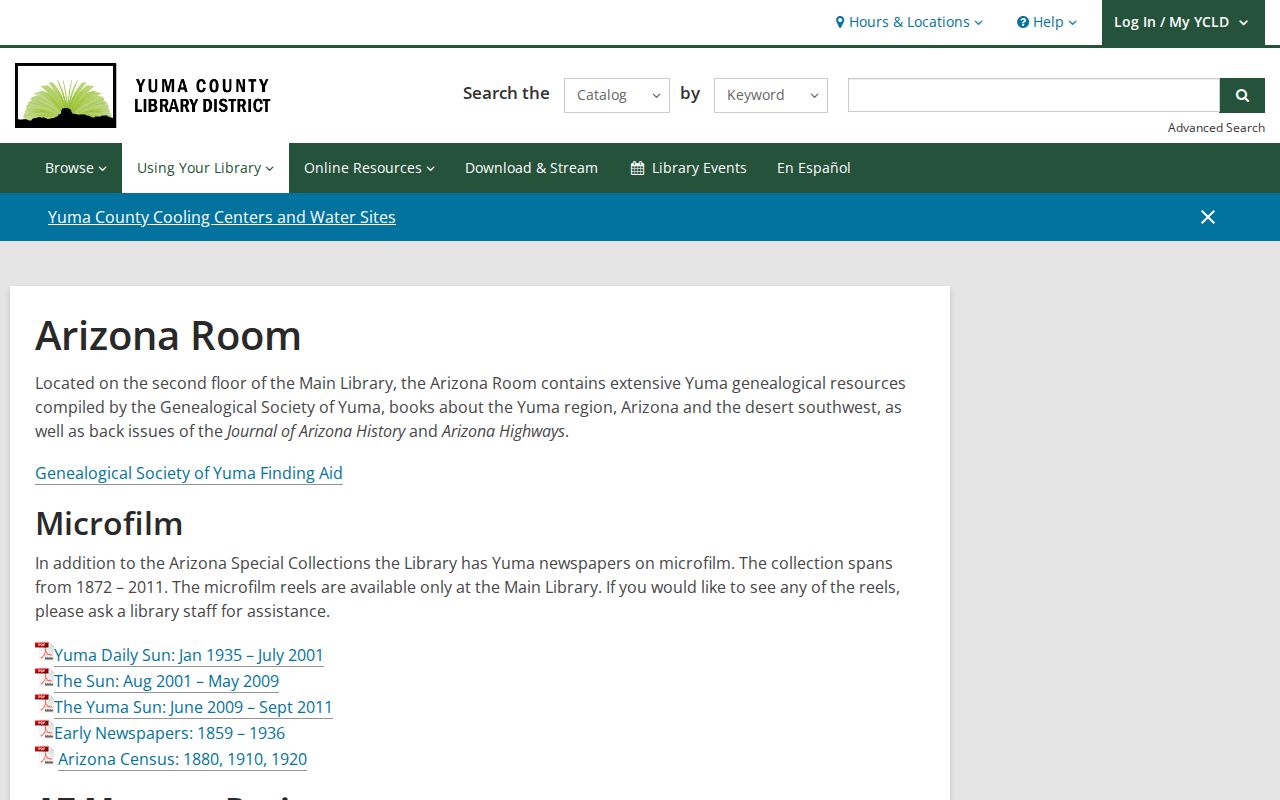
For newspapers, old directories, census tools, and staff-assisted local research, this source is the main fallback.
San Luis Directory Geography
A residents directory result needs a geography check. The name travels. San Luis, Arizona sits opposite San Luis Río Colorado, Sonora, about 26 miles south of Yuma. A catalog entry, newspaper reference, or unqualified address may point across the international border. Arizona offices hold no Sonoran records. Early county records add another wrinkle, using Gadsden Valley, an agricultural camp, or a postal label in place of the later city heading.
The city dates from 1930. It grew around the San Luis I port and incorporated in 1979. County deeds, school records, irrigation files, and federal sources therefore predate the municipal record system. New growth flips the problem. Recent subdivisions and addresses postdate the digitized directory run. Census QuickFacts counted 35,257 residents in 2020 and estimated 42,030 in 2025, an 18.5 percent rise, so historic volumes cannot stand in for today's city.
- Parcel
- A mapped unit of taxable land identified by an assessor number.
- Situs address
- The physical or tax location of the parcel, distinct from the owner's mailing address.
- Index
- A finding aid that points to a record; it is not always the record image.
- Criss-cross directory
- A directory arranged by street or phone number instead of only by surname.
Match San Luis Resident Names
Names in San Luis records bend often. Accents, compound surnames, abbreviations, and reversed name order survive unevenly across decades of city directory and assessor volumes. Search the accented spelling and the plain form. Try each meaningful surname alone, then in paternal and compound forms. Recorder and assessor portals may want the last name first, so flip the order before calling a resident lookup a failure. Optical character recognition in older street directory volumes can split letters, and San Luis itself sometimes appears as a misspelling. A failed search means the method failed. The record may still exist.
Anchor every match beyond a name. Middle initials, a spouse, an approximate age, an occupation, a phone, a post office box, a parcel, and a case or instrument number all help. Two independent identifiers make the minimum safe match. A name and city alone stay weak. Business filings can name a principal or statutory agent, while professional boards confirm a license and public contact, though neither source proves a home address. Save the date searched, exact query form, URL, and result identifier so the trail can be repeated later.
Protected San Luis Directory Gaps
Some San Luis records are closed by law. The Arizona Address Confidentiality Program gives eligible survivors and other protected people a substitute address with confidential mail forwarding. Agencies must accept it in covered settings. Protected voter registrations stay sealed too. Courts redact or close juvenile, victim, medical, mental-health, adoption, and sealed-case material, and recent vital records require eligibility. A lawful gap is a privacy safeguard. It is not evidence that a person lacks local ties.
Arizona has no broad consumer-data deletion law. Commercial directory providers run their own suppression steps, which may mean locating a listing, filing a removal request, verifying contact details, and checking back later. Share as little identification as possible during an opt-out. For an error in an official record, contact the custodian named on it and supply the case, parcel, instrument, or license number.
New San Luis Recording Alerts
San Luis owners gained a useful warning tool. The Yuma County Recorder promotes a free Recording Alert service with bilingual signup instructions. It watches for new recorded documents indexed under names you select and sends a notice. The alert blocks nothing. It does not decide title or replace title coverage. It buys time to inspect the instrument and contact the Recorder, law enforcement, or qualified counsel if a filing was not authorized.
The Recorder also lists its current office at 298 S. Main Street in Yuma. Older pages and saved directions may point elsewhere. Verify the location before you drive over. Preservation work has affected historical originals from 1864 through 1993, so requests for those items carry more weight with a docket, page, or document number. A project reaching records dated to 1894 does not make that year the live online index cutoff.
Other custodians shift too. The San Luis Municipal Court source is one more keeper of records whose page should be checked for current access details.
Let a current office page or signed form control over an older summary.