
Find San Luis Residents
A reliable San Luis residents directory search starts with the clue already in hand. A current address points to the Yuma County Assessor and its parcel map. A full name can lead to property, recorded documents, court cases, business entities, licenses, or an old directory entry. A year or former address shifts the work toward city-county directories, newspapers, deeds, probate, and census records. Each source is a snapshot. It should be matched to a second source before two people with similar names are treated as one.
Official records do not form a complete household list. A parcel card names the tax owner, not each person at the site. The voter status tool is identity-gated, and access to voter lists is limited by Arizona law. Non-owner household members and people using a protected address may not appear. Use the San Luis residents directory as a chain of clues, not as proof from one result.
- Search the Yuma County property roll by owner name or street address. Save the parcel number, situs address, legal description, and mailing address.
- Check the deed index in both grantor and grantee roles. A grantor transfers an interest; a grantee receives it.
- Use Arizona court search for a case lead, then confirm the docket or document with the court that keeps the file.
- For an older trail, browse the county directory volumes and Arizona Room newspapers one year at a time.
- When a needed record is not online, send a narrow request to the city, county, court, library, or archives custodian.
San Luis Directory Custodians
San Luis is not the Yuma County seat, so its records are split by level of government. City Hall routes municipal files. The Recorder in Yuma keeps deeds and many other recorded instruments. The Assessor links owner names to taxable parcels. County Elections manages registration data under strict use rules. Court files are divided among San Luis Municipal Court, South County Justice Court, and the Clerk of Superior Court. That geography explains why one request cannot search every resident record.
The San Luis street directory gives the full address-first route. For the home search, the key choice is simpler: send a request to the office that created or received the record, and cite a name, date span, parcel, case, or instrument number whenever possible.
Search San Luis EagleWeb Records
The Yuma County Assessor EagleWeb is the strongest address-first entry to the San Luis residents directory. Guest access is free through the public-user route. Its Account Search has Basic and Advanced modes. County guidance favors fewer strong fields instead of filling every box. Start with a surname, a street, or an exact parcel number, then narrow only if the result set is too broad.
| Search key | Best use | Format note |
|---|---|---|
| Owner name | Find parcels tied to a person or entity | Try last name first and name variants |
| Situs address | Find the taxable site | Separate number, direction, street, type, and unit |
| Parcel number | Open one known account | Portal example omits dashes |
| City or ZIP | Narrow a larger query | Not a complete resident list |
| Legal description | Bridge old and new address forms | Use subdivision, lot, block, or land-grid fields |
The parcel card may show mailing and situs addresses, account and parcel numbers, classification, legal description, values, land details, transfers, and a linked Recorder instrument. The mailing destination can be a trust, agent, business, or post office box. Even a primary-residence class is administrative evidence, not a list of all people in the home.
The San Luis City Clerk request screen shows the separate route for municipal files not found in EagleWeb.
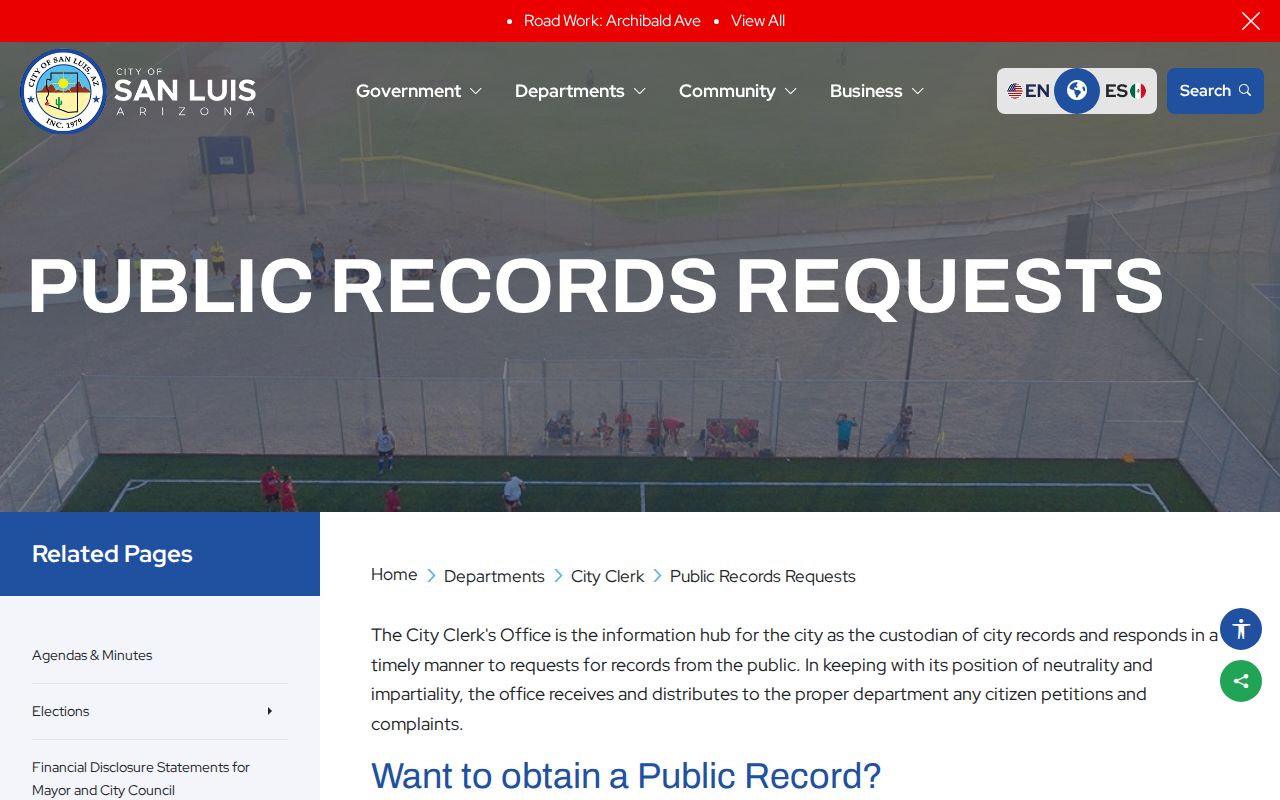
This captured source helps distinguish the city request route from the separate county property portal.
Current San Luis Resident Directories
Several public sources act like a current directory, but each covers a different group. The right roll depends on the fact being checked. Ownership, court participation, a filed business role, and voter status are not the same as present occupancy. A San Luis residents directory search gains strength when two independent records share a stable identifier such as a parcel, case, instrument, spouse, or business.
| Official source | People or links shown | Keeper | Access limit |
|---|---|---|---|
| Property roll | Owners and tax-mailing contacts | Yuma County Assessor | Free guest portal; not an occupant roll |
| Recorded documents | Parties to deeds, liens, releases, and plats | Yuma County Recorder | Index and counter; exact online start unstated |
| Court case index | Public parties and docket facts | Arizona courts and local clerks | Sealed and other protected cases excluded |
| Voter information | Matched voter status or authorized roll fields | County Recorder and state portal | Identity gate and statutory use limits |
| Entity and license files | Public business or credential affiliations | Arizona agencies | Contact address may not be a home |
For a one-name search, follow the evidence order in the San Luis resident lookup. A commercial compilation may be faster, but it can merge stale feeds and cannot correct the government source. An official index provides the custodian, record number, and path to a current file. It may take more work, yet it is reproducible and easier to verify.
Verify San Luis Court Directory Leads
The Arizona Public Access Case Lookup searches participating courts by case number or party name. At the time researched, it covered 177 of 184 courts and refreshed weekly. Results can identify the court, case number, type, filing date, party role, status, and docket events. They do not turn every filed image into a public document. Sealed matters, orders of protection, mental-health cases, victim or witness data, juvenile matters, and other protected material are absent.
San Luis Municipal Court handles city-code, traffic, and misdemeanor matters in its jurisdiction. Its current written request form allows viewing, copies, audio, or certification and asks for party names, date of birth, case details, and chosen documents. The local file controls when a statewide result differs. Superior Court civil and criminal documents filed from July 1, 2010 may also be available through eAccess after account and purchase steps.
The state court search entry illustrates why the result is a lead rather than a final finding.
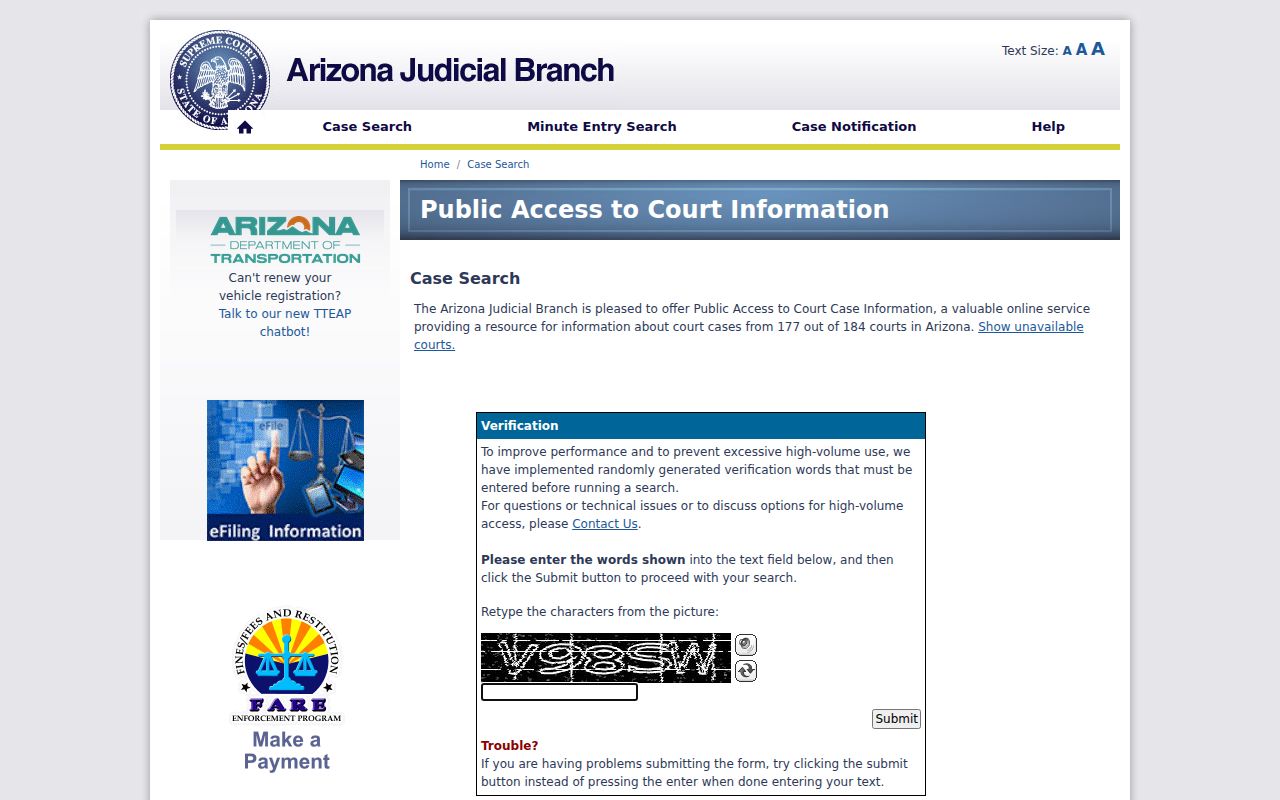
Record the court and case number before requesting the official docket or a certified copy.
San Luis Voter Directory Limits
My.Arizona.Vote is a personal status and ballot-information tool. It asks for identity data such as county, last name, date of birth, and an accepted identifier. It is not an open map of San Luis voters. Under A.R.S. §16-168, authorized records can include a registrant's name, party preference, registration date, residence address, mailing address, ZIP, phone if supplied, birth year, occupation if supplied, and participation history. Ballot choices are never part of that history.
Month and day of birth, Social Security and driver identifiers, signatures, email addresses, and protected-registration details are withheld. The county affidavit requires a permitted purpose and restricts transfer or online redistribution. Aggregate voter totals by precinct or district are safer for civic context because they do not expose a household. A missing result may also reflect a move, list maintenance, or a protected record.
Lawful use. Public records may support personal research, family history, and civic review, but never stalking, harassment, threats, or impersonation.
The official Arizona voter portal shows the identity-gated route.
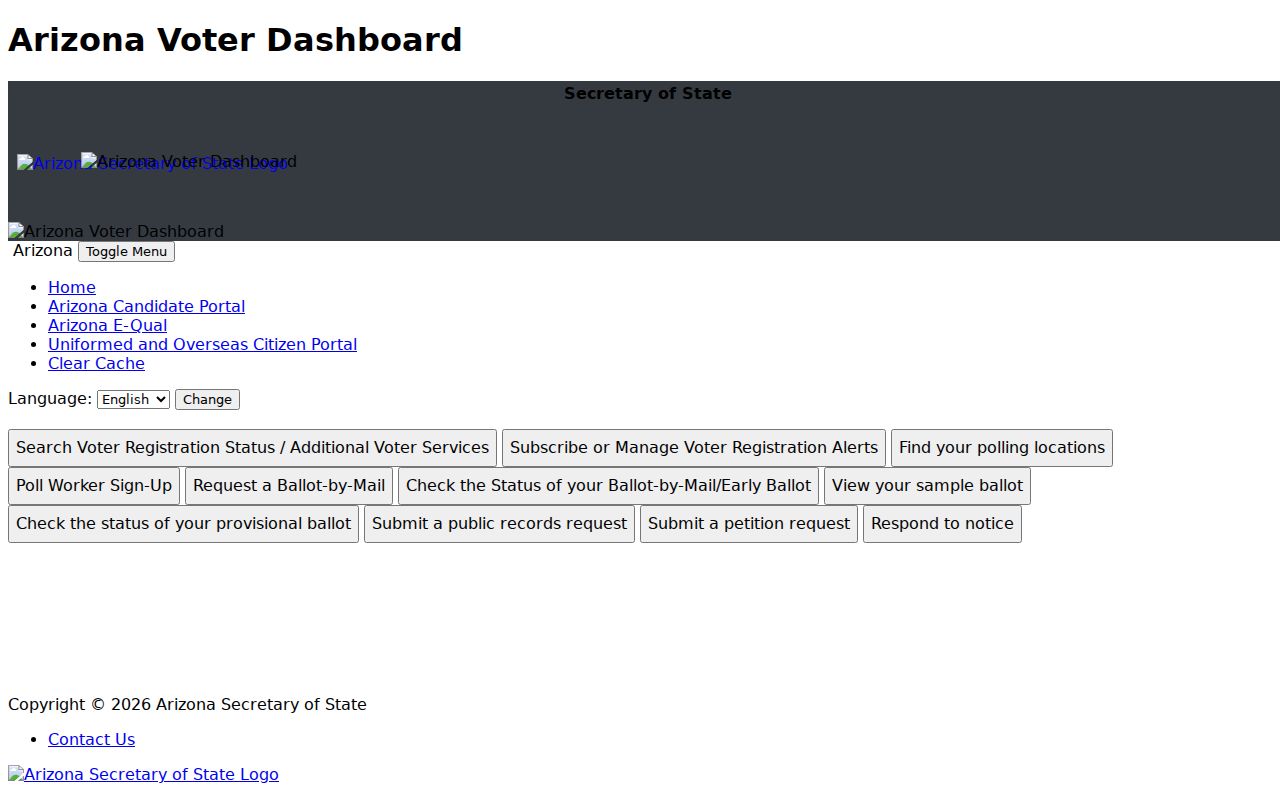
The screen confirms why a voter lookup cannot be treated as a public block directory.
San Luis Family Record Directory
Birth and death records follow a different path. The Arizona Bureau of Vital Records and Yuma County's local registrar issue recent certified copies only to eligible applicants with identification and relationship or legal-interest proof. Under A.R.S. §36-351, birth certificates transfer to the State Archives 75 years after birth and death certificates after 50 years. The archival cutoff opens historic research; it does not remove the rules for a recent certified copy.
Marriage licenses and divorce decrees belong with the Yuma County Clerk of Superior Court, not the state birth and death office. A court index may point to a divorce case, but the decree comes from the case file. For an older family line, pair the archival certificate index with probate, deeds, obituaries, directory volumes, church registers, cemetery sources, and Arizona Room newspapers. Each adds a relationship, place, or date that helps keep same-name residents apart.
The state vital-records landing page presents the official application channel.
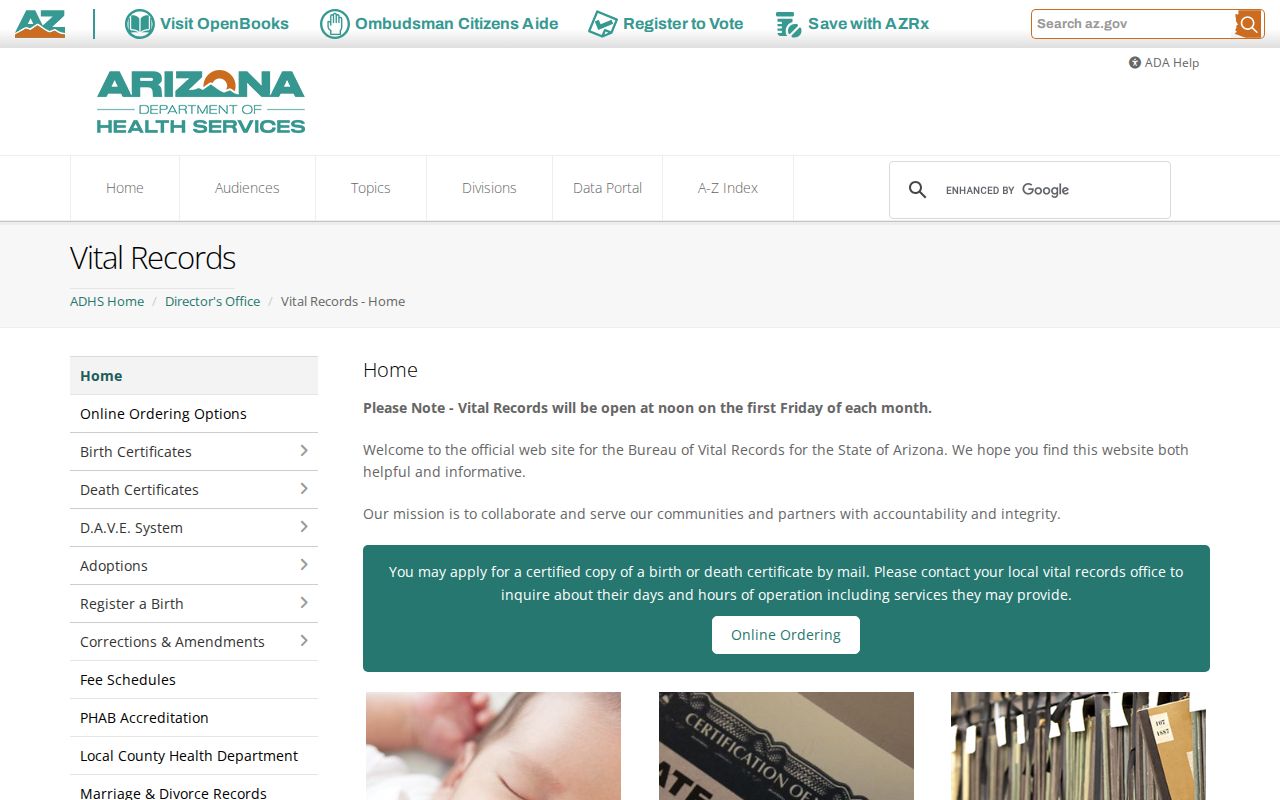
Use the current agency form because eligibility, proof, fees, and service channels can change.
Historical San Luis Resident Directories
The firm historical shelf is the Arizona Memory Project's digitized Yuma City-County and Cosmopolitan Telephone directories. Fifteen volumes are verified: 1948, 1949, and every year from 1951 through 1963. San Luis appears inside countywide books with Yuma, Somerton, Wellton, and other communities. The 1960 item was digitized in 2019 by FamilySearch International for the State Research Library. Catalog text may spell the city as “San Luise,” so OCR alone can miss a useful entry.
An entry may show surname, given name, spouse, occupation, phone, home or room address, and a post office box. Early rural listings can be box-based. Read the publisher's abbreviations and move one volume at a time. An appearance and later absence can bracket a move, but should be checked against deeds, newspapers, census records, or probate. The San Luis city directory collection details the years and reading method.
San Luis Arizona Room Records
The Arizona Room at Yuma Main Library fills gaps the web does not. Its newspaper microfilm spans 1872 through 2011 in the aggregate, with named Yuma runs from 1935 through 2011 and early newspaper material from 1859 through 1936. The Yuma County Library ephemera holdings include San Luis clipping folders for 1956 through 1988, shorter or annual spans from 1990 through 2012, and a general local-history folder.
Ask Special Collections for a reel, folder, topic, or year rather than an open-ended surname search. School registers, diaries, scrapbooks, family files, oral histories, and manuscripts may add facts, but access limits can protect students or private donors. The San Luis Branch migrant-worker project is especially useful for agricultural and cross-border lives that property ownership does not capture.
The library's Arizona Room overview identifies the local-history access point.
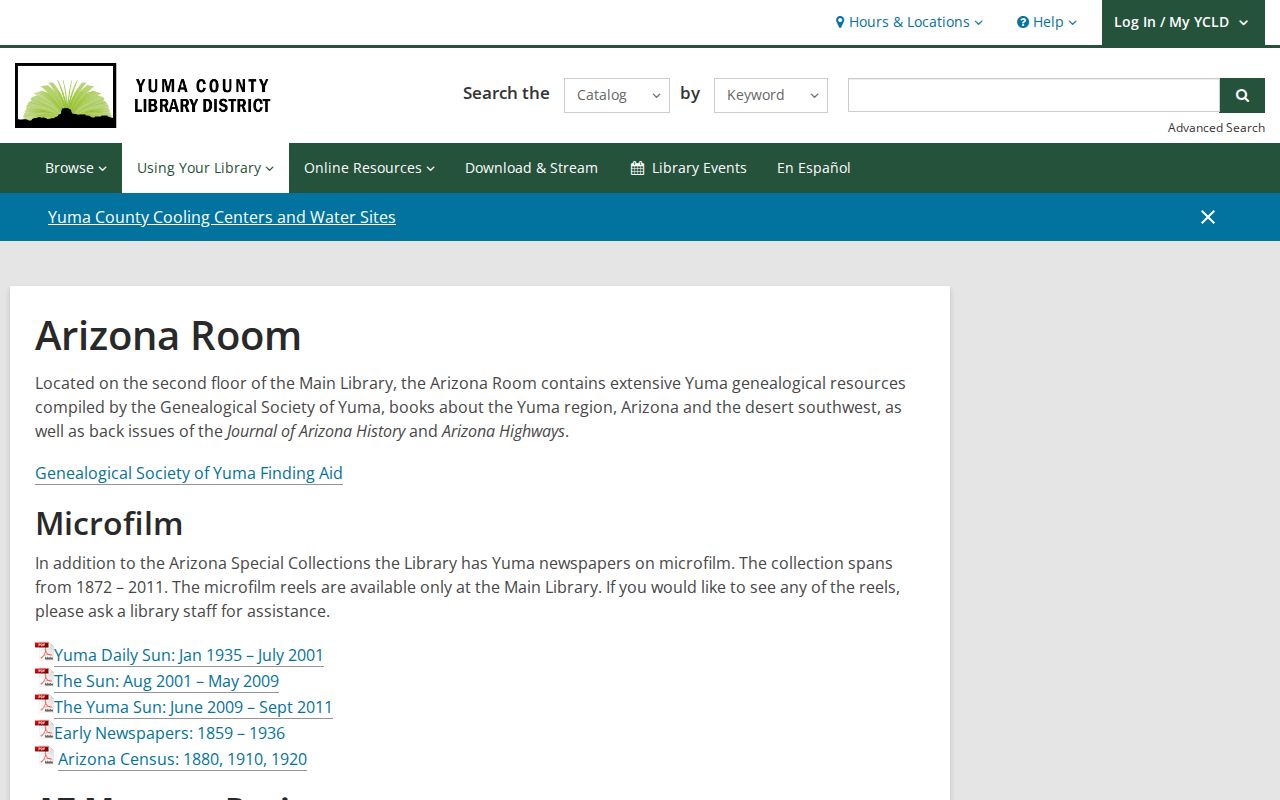
This source is the main fallback for newspapers, old directories, census tools, and staff-assisted local research.
San Luis Directory Geography
A San Luis residents directory result needs a state and county check. San Luis, Arizona sits opposite San Luis Río Colorado, Sonora, and lies about 26 miles south of Yuma. A catalog entry, newspaper reference, or unqualified address may point across the international border. Arizona offices do not control records created in Sonora. Early county records may also use Gadsden Valley, an agricultural camp, or a postal label instead of the later city heading.
The city was founded in 1930 around the San Luis I port and incorporated in 1979. County deeds, school records, irrigation files, and federal sources therefore predate the municipal record system. New growth creates the reverse problem: recent subdivisions and addresses postdate the digitized directory run. Census QuickFacts counted 35,257 residents in 2020 and estimated 42,030 in 2025, an 18.5 percent rise. Historic volumes cannot stand in for today's city.
- Parcel
- A mapped unit of taxable land identified by an assessor number.
- Situs address
- The physical or tax location of the parcel, distinct from the owner's mailing address.
- Index
- A finding aid that points to a record; it is not always the record image.
- Criss-cross directory
- A directory arranged by street or phone number instead of only by surname.
Match San Luis Resident Names
San Luis records are bilingual and often preserve compound surnames, accents, abbreviations, and changing name order. Search the accented spelling and a plain-letter form. Try each meaningful surname alone, then in paternal and compound forms. Recorder and assessor portals may expect last name first. OCR in older books can split letters or turn San Luis into a misspelling. A failed search calls for a method change, not a claim that no record exists.
Keep middle initials, spouse names, approximate age, occupation, phone, post office box, parcel, and case or instrument number. Two independent identifiers are the minimum safe match. A name and city alone are weak. Business filings can identify a principal or statutory agent, while professional boards can confirm a license and public contact. Neither source proves a home address. Preserve the date searched, exact query form, URL, and result identifier so the trail can be repeated.
Protected San Luis Directory Gaps
The Arizona Address Confidentiality Program provides eligible survivors and other protected people with a substitute address and confidential mail forwarding. State and local agencies must accept it in covered settings. Protected voter registrations also remain sealed. Courts redact or close juvenile, victim, medical, mental-health, adoption, and sealed-case material. Recent vital records require eligibility. A lawful gap is a privacy safeguard, not evidence that a person has no local ties.
Arizona has no verified broad consumer-data deletion law in the research used for this build. Commercial directory providers use their own suppression steps, which may require locating a listing, submitting a removal request, verifying contact details, and checking again later. Limit the identification shared during any opt-out. For an error in an official record, contact the custodian named on that record and provide its case, parcel, instrument, or license number.
New San Luis Recording Alerts
The Yuma County Recorder now promotes a free Recording Alert service with bilingual signup instructions. It watches for new recorded documents indexed under selected names and sends a notice. The alert does not block a filing, decide title, or replace title coverage. It gives a San Luis owner time to inspect the instrument and contact the Recorder, law enforcement, or qualified counsel if the filing was not authorized.
The Recorder also lists its current office at 298 S. Main Street in Yuma. Older pages or saved directions may point elsewhere, so verify the location before visiting. Historical originals from 1864 through 1993 have been affected by preservation work. Requests for those items are stronger with a docket, page, or document number. A project reaching records dated to 1894 does not prove that 1894 is the live online index cutoff.
The San Luis Municipal Court source is another example of a custodian page that should be checked for current access details.
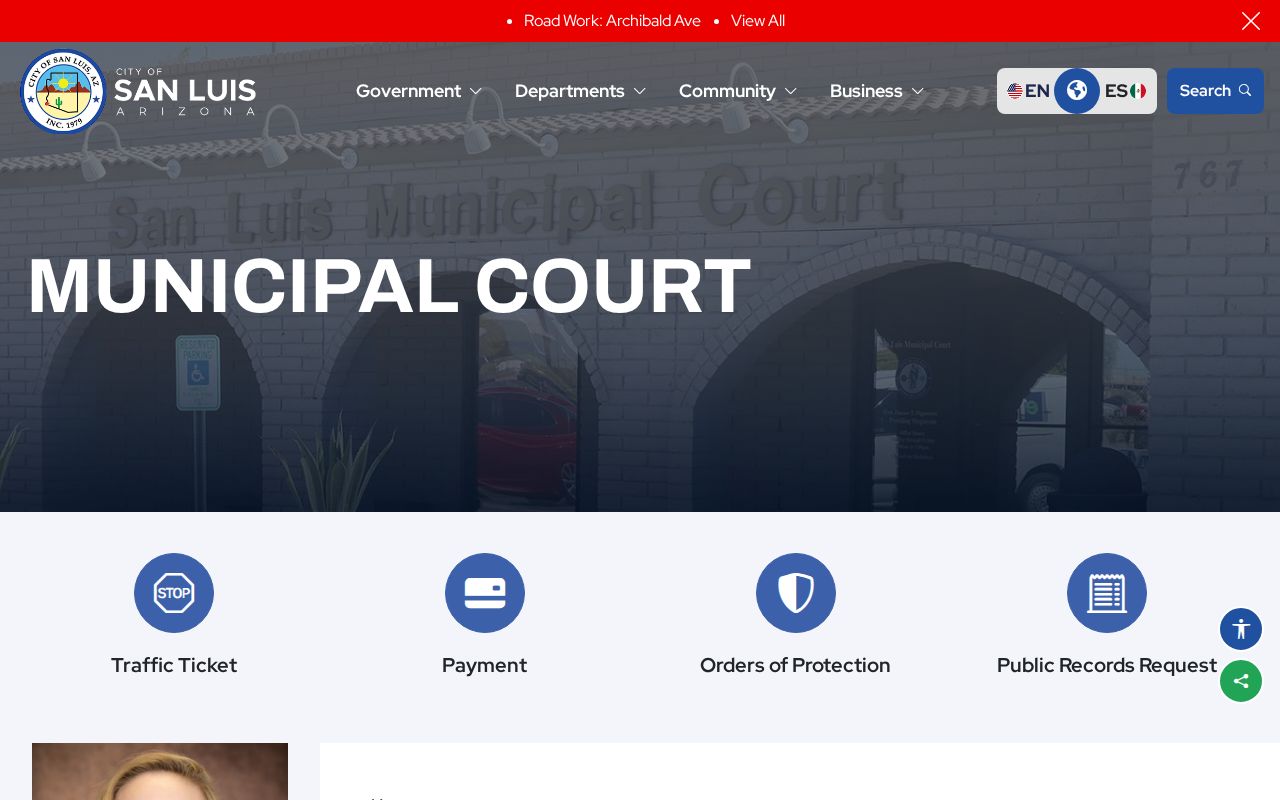
A current office page or signed request form should control when an older summary gives different instructions.