
San Luis Previous Residents Sources
Previous-resident research needs a source suited to the period. The current roll supplies a starting owner and land key. The Recorder carries that owner backward through instruments. Directories and census schedules add household evidence, while clippings, probate, permits, and federal archives fill gaps. Coverage is uneven, so a blank portal result is a prompt to change channels, not proof that no record exists.
| Source | Years it covers | Where held | What it can show |
|---|---|---|---|
| Current property roll | Current tax year and available history | Yuma County Assessor EagleWeb | Owner, situs, mailing, APN, legal description, transfer link |
| Recorded instruments | Exact online start not published; older books survive | Yuma County Recorder portal and counter | Grantors, grantees, deeds, liens, dates, instrument or book/page |
| County directories | 1948, 1949, 1951 through 1963 verified online | Arizona Memory Project | Named residents, businesses, phones, PO boxes, some addresses |
| Federal census | Public through 1950 under the 72-year rule | NARA and library databases | Household members, kinship, age, birthplace, and tenure context |
| San Luis clipping files | 1956 to 1988, then short or annual spans through 2012 | Yuma Main Library Arizona Room | Obituaries, property news, civic names, businesses, and events |
| Permits and code files | Published coverage not located | San Luis Development Services or Clerk request | Project address, applicant, owner or contractor, and work dates |
| Federal regional records | Series vary, including territorial and agency records | NARA Riverside | Land, tax, court, naturalization, school census, and agency context |
Begin with the newest reliable identifier and move back. A nineteenth-century deed question belongs at the Recorder or archives. A mid-century household question may start in a directory, then use the 1950 census or newspapers. A recent renovation question starts with city records.
Start San Luis Previous-Resident Research
Open Yuma County Assessor EagleWeb through its free Public User Login. Search the San Luis situs address and save the current owner name, owner mailing destination, account, APN, legal description, subdivision and lot, or section-township-range. The card may also expose Transfers or a linked Recorder document number.
Situs means the physical tax location. Mailing means where notices go. Even when the two match and the class suggests a primary residence, the parcel card does not list every person who lived there. It is a launch point for the backward trail.
A quick flow keeps the method clear: address → parcel and legal description → current owner → acquisition deed → seller → earlier acquisition deed → older books and household sources.
Trace San Luis Previous-Resident Deeds
The deed chain records title, not residence. Still, it is the firmest way to move from today's San Luis parcel to earlier owners. Use the Yuma Recorded Documents search with both party roles and a bounded date range when a name is common.
- Find the current owner's acquisition deed using the owner as grantee. Confirm the legal description or APN against the subject parcel.
- Copy the grantor, instrument number, recording date, document type, and book/page if shown. The grantor is usually the seller in a deed.
- Search that seller as grantee in an earlier period. Match the same land description before adding the person to the chain.
- Repeat from buyer to seller. Test accents, compound surnames, reversed name order, spouse names, and business or trust names.
- When the web index stops, take the precise instrument, docket, or book/page citation to the Recorder counter for older images and books.
The official Recorder portal is the page used to search parties and recorded documents.
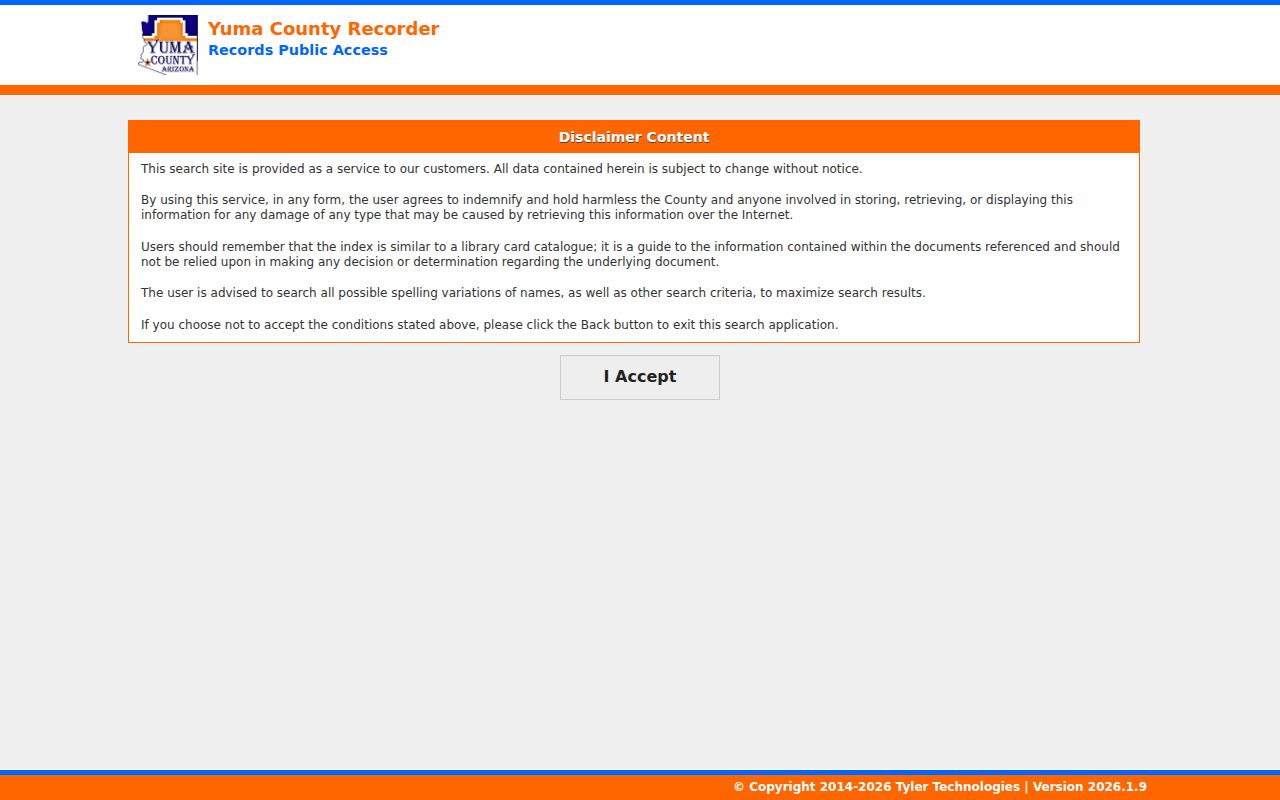
The search screen supplies an index citation. Verify the instrument itself before treating an indexed spelling, role, or land match as final.
- Grantor and grantee
- The grantor gives an interest, while the grantee receives it. Search a past owner in both roles.
- Chain of title
- The linked sequence of transfers for the same land, checked from one instrument to the next.
- Legal description
- The subdivision, lot, block, tract, or survey text that identifies land more durably than a postal address.
- Instrument number
- The unique Recorder citation assigned to a filed document. It is stronger than a name-only reference.
Recover San Luis Past-Resident Deeds
The Recorder's public landing page does not state the earliest year in the live index. Do not publish 1894 as that cutoff. A preservation notice says original materials from 1864 through 1993 were affected or removed for Kofile work and need precise docket, page, or document references for retrieval. A later notice says the October 2023 project covers historical material dating to 1894 and plans online access as work is completed.
Use the online index first, then call or visit the Yuma County Recorder at 298 S. Main Street in Yuma, weekdays 8 to 5. Give a durable citation and ask whether the image is online, under conservation, or available through an older book. The office, not a guessed web date, controls access.
Note: Capture every instrument number as soon as it appears; exact citations make San Luis historical-image requests far more useful than a surname alone.
Keep San Luis Past-Resident Land Constant
Street forms change more often than land descriptions. San Luis Resolution 576 changed a road name to Urtusuastegui in 2004. The city adopted a Roadway Naming and Addressing Policy in 2017, and another 2017 resolution changed First Avenue to William Brooks Avenue. County assessor modernization also altered many parcel identifiers around the early 2010s.
Write the subdivision, lot and block or the section-township-range beside each deed. Search both the old and new road name through the San Luis resolution archive. If the APN changes but the legal description and bordering parcels agree, the land trail can continue with less risk of following a different address.
Continuity tip. Preserve the legal description at every step. It can bridge a changed APN, shortened street type, renamed road, or postal revision.
Find San Luis Past Households
Ownership is only one layer of past residents. The Arizona Memory Project's countywide directory run has fifteen verified volumes: 1948, 1949, and 1951 through 1963. Look for the surname first, record the address, spouse, occupation, phone, and PO box, then inspect a reverse section if that volume has one. Early San Luis evidence may sit under a county community code or postal entry.
Pair the dated directory snapshot with the nearest lawful census and local source:
- Search every meaningful part of a Spanish compound surname, with and without accents. Browse nearby PDF pages when OCR fails.
- Move one directory year at a time. First and last appearances can bracket a move without claiming an exact date.
- Compare a 1948, 1949, or 1951 entry with the public 1950 census. The 1960 census is not public as of 2026.
- Use deeds to distinguish owners from other householders. Check newspapers, school registers, probate, and obituaries for relationships.
The collection structure, publisher clues, and entry abbreviations are treated fully on the San Luis Directory Book page. Here, the point is to place a dated household on the same parcel trail without assuming each named person held title.
Search San Luis Previous-Resident Clippings
The Arizona Room's San Luis ephemera is unusually specific. It includes a long 1956 to 1988 clipping group, shorter or annual groups from 1990 through 2012, and a general history folder. Ask for a box, topic, and year instead of sending an unrestricted surname query. The folders can connect past residents to a sale, civic event, school, business, obituary, or address when the directory is silent.
The Yuma County Library District Ephemera Collection describes the local subject holdings.
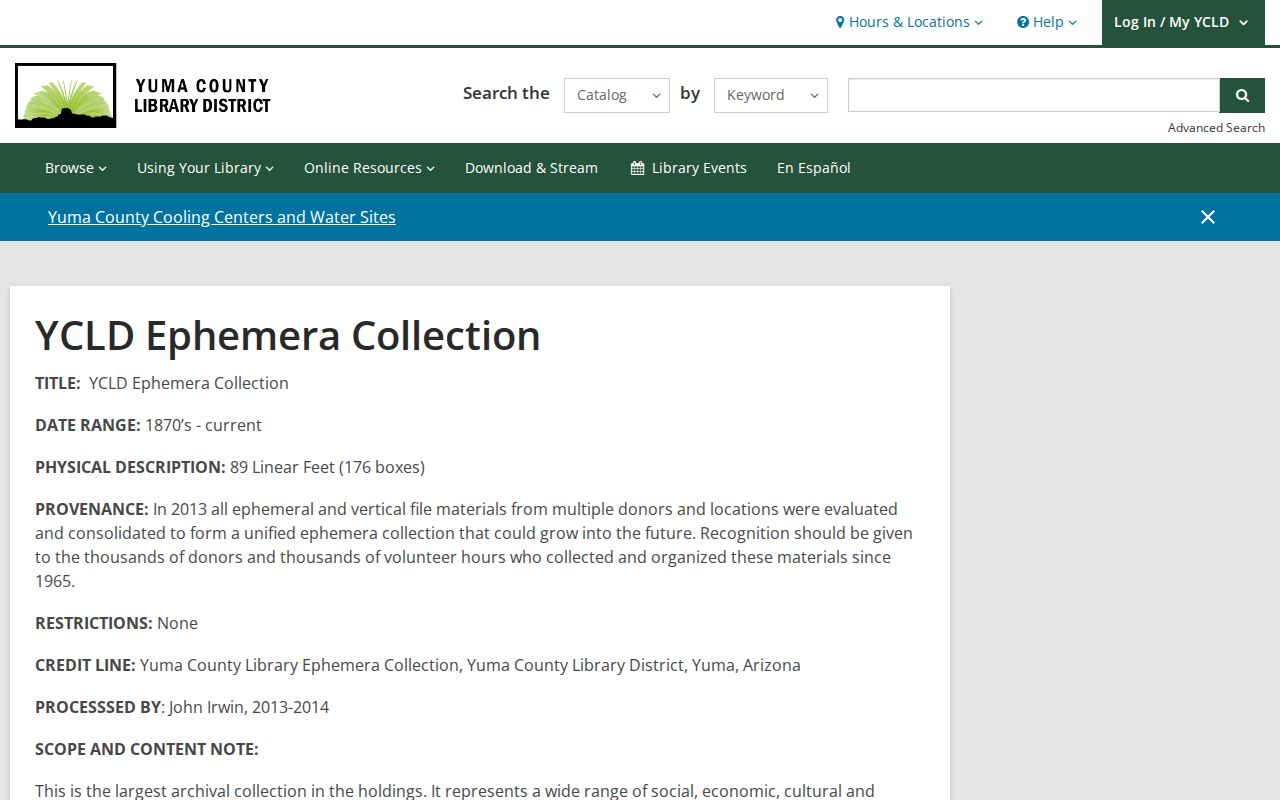
The collection page points to an offline research channel. Contact Arizona Room staff for the San Luis folder and verify names against deeds, census entries, or probate files.
Date a San Luis Address
Building permits, inspections, zoning records, and code files can establish when work occurred and name an applicant, owner, or contractor. San Luis exposes those departmental categories, but no full public address index with a stated date span was located. File a focused request through the City Clerk records channel or Development Services.
Supply the street address, APN, former street name, permit or case number if known, and a date range. Ask for plans or maps only when needed, since record type affects cost. Treat each named party as a role in the project. A contractor or permit applicant is not proof that the person was among the past residents.
No verified San Luis-specific Sanborn fire-insurance sheet was located. Do not substitute a Yuma sheet for the city. Use plats, permits, deeds, assessor records, and dated photos or news instead.
Follow San Luis Previous-Resident Heirs
A deed chain may end with an estate, personal representative, or family transfer. Probate petitions and orders can identify heirs or the person authorized to act. An obituary may supply relatives and a move history, while the next deed shows what happened to the land. Compare all three before drawing a family conclusion.
The Yuma County Clerk of Superior Court keeps probate files. Arizona Public Access can help find a case, but the local clerk's file is the official record. For a deceased owner's earlier life, Arizona Room newspapers and HeritageHub may add context. Recent vital certificates remain restricted to eligible applicants, while older Arizona birth and death certificates transfer to the State Archives after their statutory periods.
This is a lawful human use of previous-resident records: locating heirs for family or estate history. Contact living people with care, disclose the reason, and respect a refusal.
Extend San Luis Previous-Resident Records
San Luis county and city records do not capture every early resident. The city was founded around the port in 1930 and incorporated in 1979, while county, agricultural, school, irrigation, and federal records predate municipal files. Early families may appear under Gadsden Valley, an agricultural camp, a postal label, or an agency rather than a San Luis heading.
National Archives at Riverside genealogy services describe the appointment-based regional research channel.
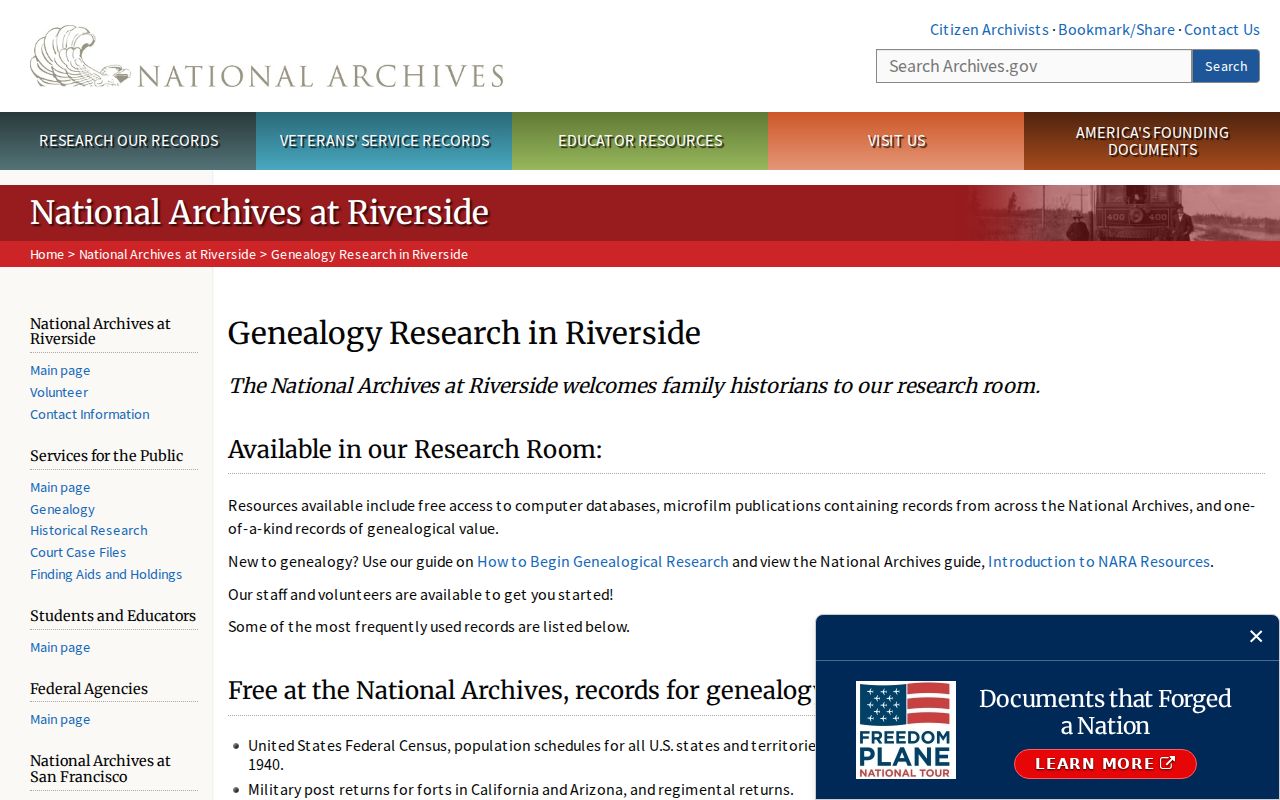
Riverside holdings include federal Arizona land, territorial tax, naturalization, District Court, and Fort Yuma Agency material. These series serve specific federal and Indigenous research questions, not a general roll of past residents.
Set San Luis Previous-Resident Limits
A chain of title can be complete while the household history is not. Renters, children, relatives, seasonal workers, and others may never appear on a parcel card. Directories omit people, use PO boxes, and carry OCR errors. Newspaper items are selective. Some city files have been destroyed under valid retention schedules, and protected or sealed records remain closed.
State findings at the level the source supports. Say that a deed transferred land, a directory listed a person in a given year, or a census placed a household there. Never use missing records to declare that no one lived at the address.
Lawful use. Trace San Luis previous residents for house history, genealogy, heir research, or personal curiosity. Do not use the trail to stalk, harass, track, threaten, or harm a living person.